
Inside the studio: Celebrating 20 years of dandelion + burdock
Immersive Experiences
Disguise Platform

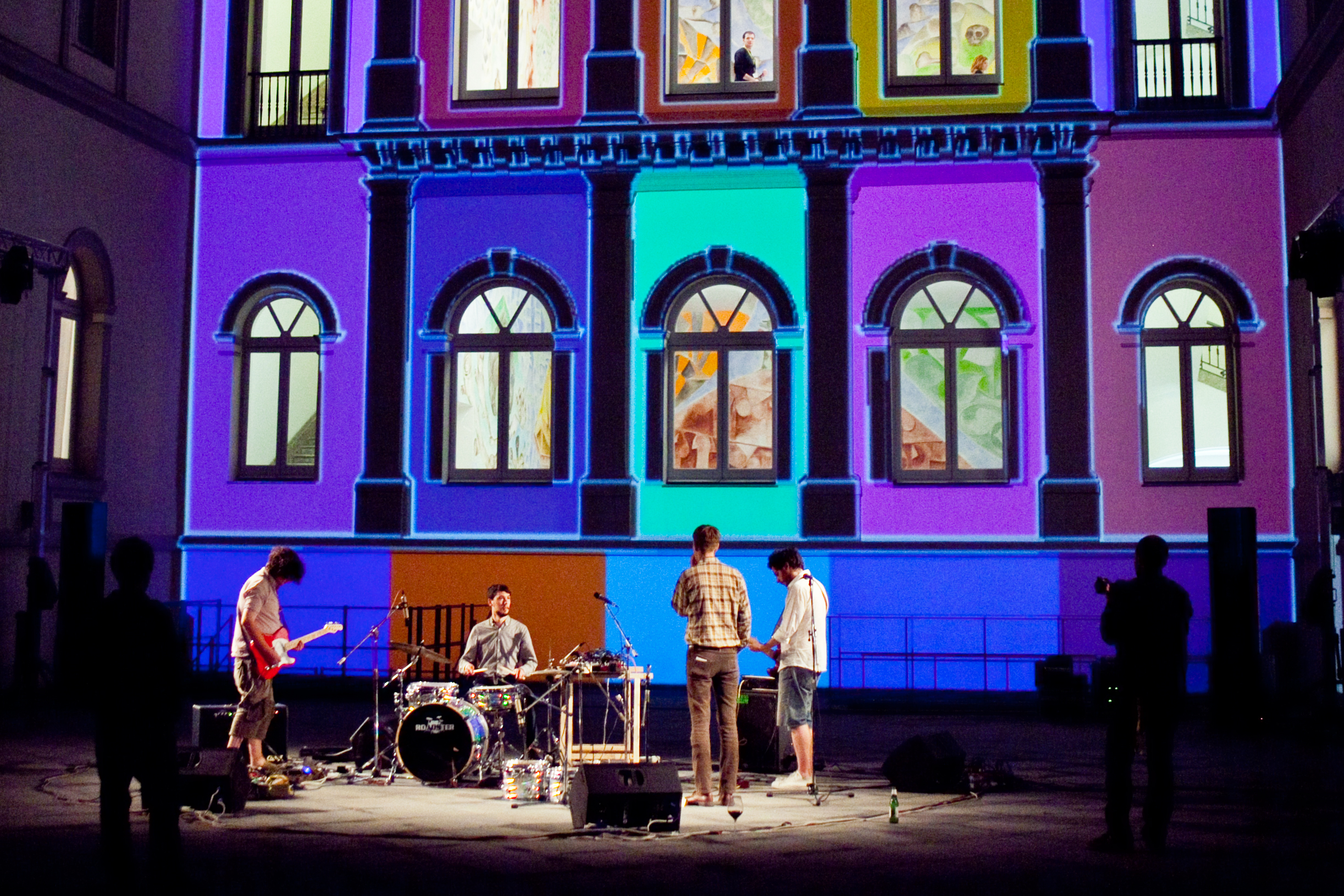
In 2005, dandelion + burdock began as a small studio exploring how moving image could live in real spaces beyond flat screens. By 2010, that curiosity had taken them to the courtyard of Museo MADRE in Naples, creating live visuals for artist Jamie Shovlin. Working directly onto the museum’s classical architecture, refurbished by renowned architect Alvaro Siza, they dissected the façade into graphic layers and turned the courtyard into a responsive, three-dimensional stage of light and sound. For Managing Director Niall Thompson and Director of Creative Workflows Nils Porrmann, it became the first large-scale proof of the 3D mapping concept. By rethinking how moving image could interact with architecture and live performance in real time, they began to define an approach that treats buildings as active parts of the storytelling rather than neutral backdrops.
Today, the company has grown from experimenting in museum courtyards to displaying projected visuals onto some of the most iconic buildings in the world, including Buckingham Palace, the Hoover Dam, and Burj Khalifa. With offices in London and Los Angeles, and a growing presence in the GCC, they have built a reputation for turning ambitious ideas into audience-ready experiences, using both projected and LED visuals for everything from brand activations to interactive installations and live events.
As the studio hits its 20th anniversary, we caught up with Thompson and Porrmann on their project highlights from over the years, the studio’s latest immersive work for Ford Mustang, and their experience as early adopters of - and valued contributors to - Disguise.
A studio is born
It was 2005, and Thompson and Porrmann had launched dandelion + burdock as a studio that would challenge the status quo. “From the start, we aimed to operate on the currency of ambition,” explains Thompson. “We set out to work with clients who wanted to do something different.”
The flip side to that, of course, was that the projects the studio got involved in had often never been done before. Each undertaking was a challenge, involving new AV technologies to tell stories in new ways. As projects continued coming in, both Porrmann and Thompson developed their own software to help them run these experiences.
“It gave us a good insight into how difficult it is to create your own,” remembers Porrmann. “By the time it started to detract from what we were trying to do creatively, we knew we needed to find another way.” It was then that Porrmann, who was already VJing for UVA, got introduced to the very early versions of Disguise’s d3 software by Ash Nehru.
“Since day one, we recognized that Disguise technology could enable us, as a creative studio, to blur the lines between art, design and engineering,” Thompson explains. “We decided to partner with Disguise really early on, and it made a very big difference.”
Twenty years of collaboration
Over the course of the next two decades, Thompson and Porrmann provided feedback to the Disguise team whenever they used d3 on one of their projects, helping to hone the tool. They helped to develop Disguise training guides for Essentials and Advanced Workflows, working with trainers and teams globally, as well as collaborating on the development of 3D and projection-mapping workflows. This helped to transform d3 into Disguise’s flagship Designer software, pressure-testing features such as multi-user editing at scale, matrix routing and the heatmap visualiser, alembic files, UV modules and more, which have gone on to become popular additions to workflows across the industry.
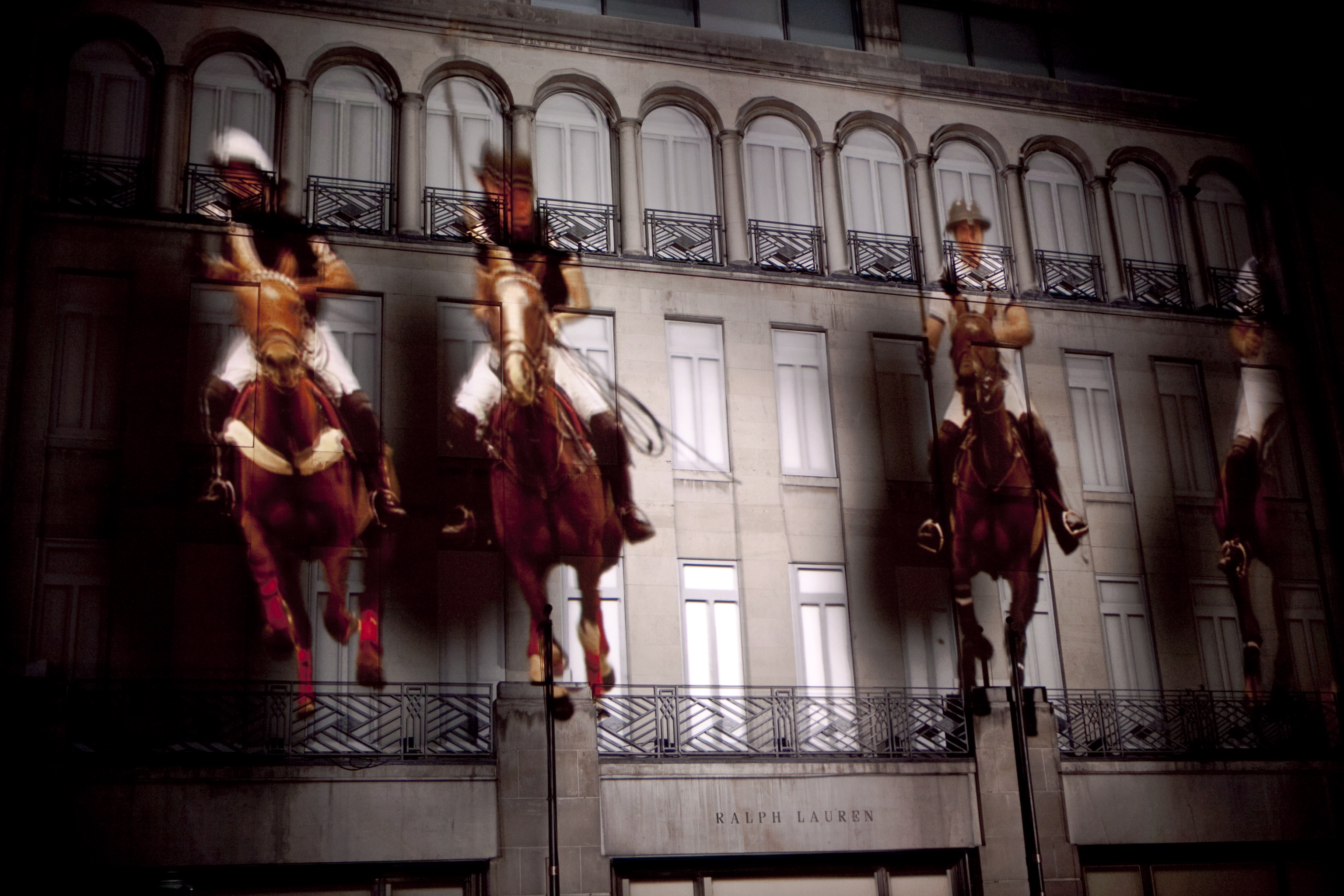
“One of the most interesting early projects we worked on for UVA and Drive Productions that propelled features in Disguise was an experience for Ralph Lauren,” explains Porrmann. “We’d been tasked to help celebrate their brand and showcase their products by transforming their flagship stores in London and New York with projection mapped visuals. We covered each store in 3D motion graphics, live action footage of models, a game of polo, and more. The challenge at the time was to use a new workflow, now commonplace, where all content resides on a virtual version of the facade, using projectors in a 3D space for calibration within the software. These tools had to be written by the Disguise team and tested in real world conditions for the first time specially for this project.”
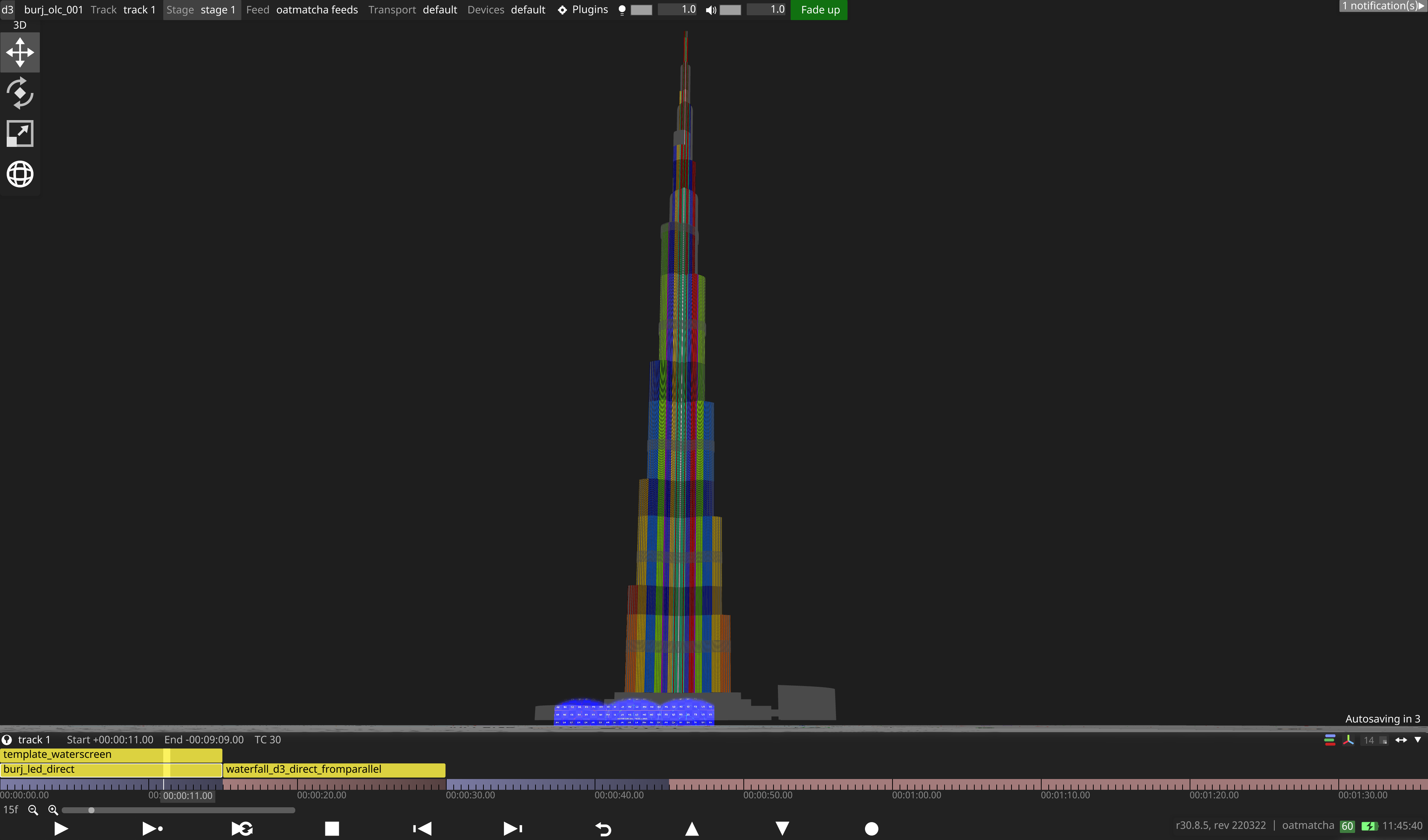
Another highlight involved developing lightshows to project onto the 163-storey Burj Khalifa for New Year’s celebrations in 2018 and 2019, integrated by SACO. Together, these projects won three Guinness World Records for their sheer size and scale. “By the time we’d completed the 2019 show, we’d managed to deliver a mind-blowing 29,628 vertical pixels,” reveals Thompson. He explains that the dandelion + burdock team began work by converting the Burj Khalifa’s architectural CAD model into a 3D format that they could use for AV planning.
A new era of global creativity
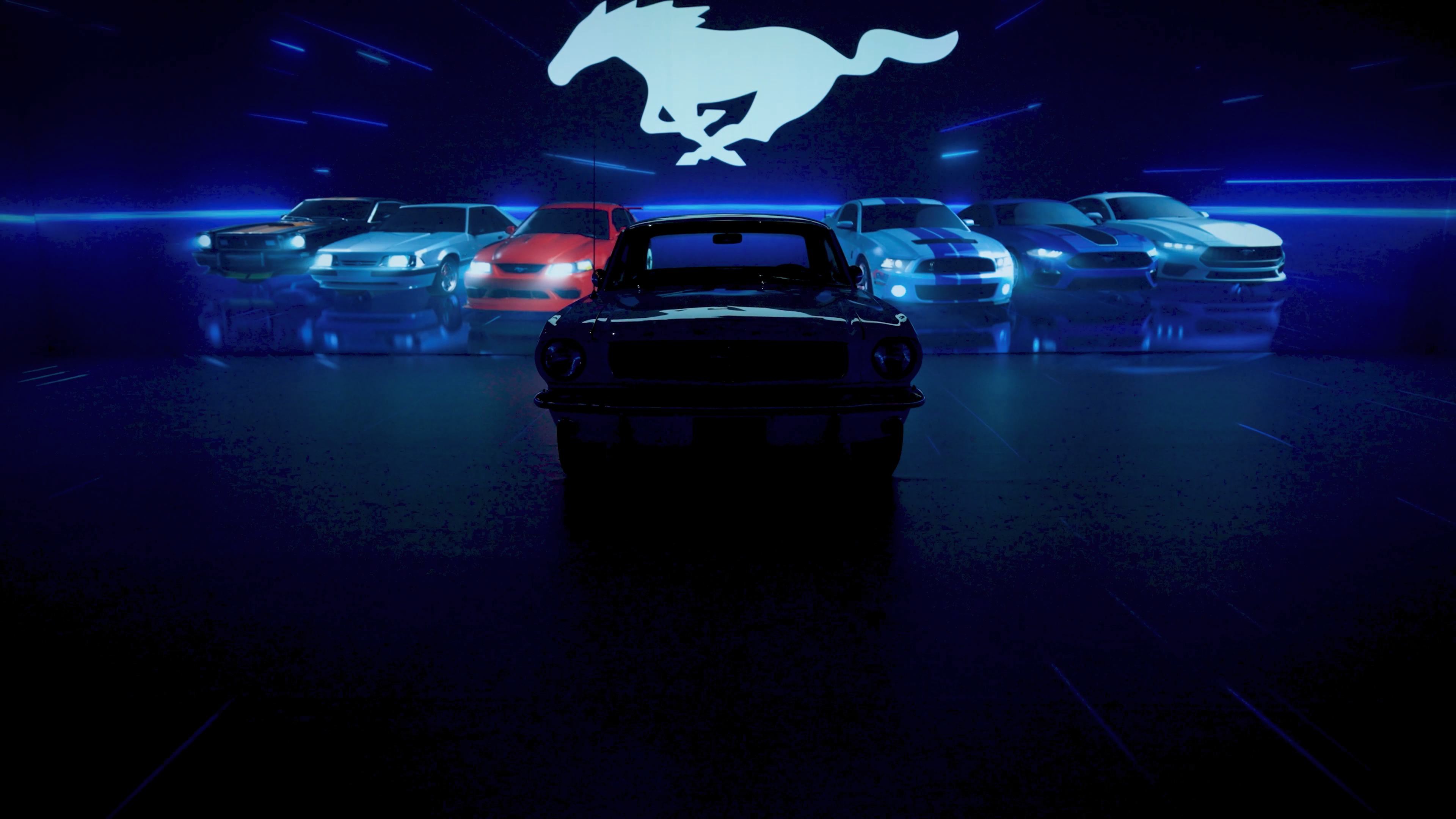
The team’s most recent creative wins include an immersive activation for Ford Mustang, which launched in LA in November 2025 and will continue to tour around major cities in the US. The large-format projection show combined heavy media reliability, touring-grade workflows, and creative and technical integration, all running on Disguise EX 3+. Mandated by their content production for the Mustang exhibition dandelion + burdock set up the creative workflow and then collaborated with the Disguise LA team on the system design, while Disguise provisioned projectors, wiring charts, and system setup as part of a collaborative effort.
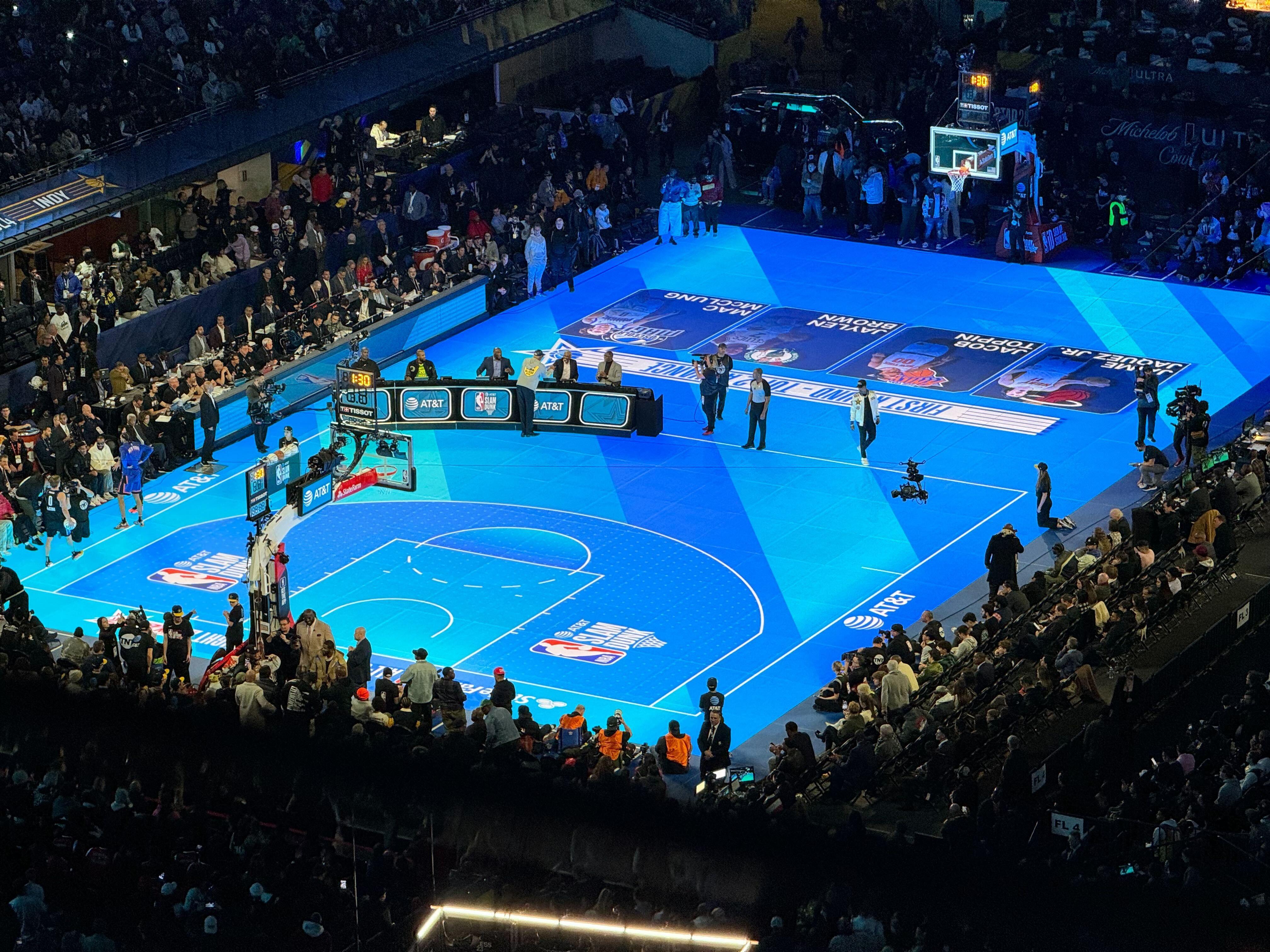
Sports entertainment is another area within which dandelion + burdock has embedded themselves in recent years. The studio produced the video content for NBA’s All-Star event in 2024, where an ASB Glassfloor interactive LED basketball court powered by Disguise was unveiled. The event not only showcased the groundbreaking LED court technology and what it means for fan experience, but also highlighted dandelion + burdock's ability to innovate and captivate audiences on a grand scale.
The future of immersive
Today, the dandelion + burdock workflow is both distributed and tool-agnostic, with teams in Abu Dhabi, London and LA collaborating across time zones and using everything from Unreal Engine to Houdini, TouchDesigner and Notch, depending on the project. The team regularly share their findings from projects and perspectives on technology in the AV field in articles supporting the AV community, covering everything from 10bit codec to real-time, AI-driven virtual humans, and XR production overviews.
“Projects are just generally getting more and more complicated,” reveals Thompson. “When we started, most of our clients wanted projected visuals for live music, and now we’re seeing AV technology bleeding into all kinds of different sectors and industries like museums, sports stadiums and fashion shows. At the same time, the sheer number of pixels has gotten higher, and you need the right equipment to drive all those pixels. Then you also need a good, efficient workflow, and then you also need a way to render all those pixels. We still need to figure out ways to render 30,000 pixel wide canvases, and that's becoming more of the norm.”
Luckily, the dandelion + burdock team is made up of many experts who can help. Thompson and Porrmann now lead specialists in both real-time and pre-rendered video that are available in time zones worldwide, allowing them to work on projects around the clock. Together, they take the time to meticulously plan and execute every project, which can take from three months up to two years to complete.

“While the jobs are becoming more complicated, luckily our capabilities have progressed too,” Thompson explains. “That’s made some things far easier. When we first started, for instance, a lot of spaces required retrofitting to make the technology work. Today, buildings go up with the tech in mind.”
"The heart of what we're doing, the instinct to tell stories, hasn't really changed as we're still using light as our main medium. But it’s good to see people embrace the technology that allows us to push that medium further. Whether it’s for stage projection mapping or complex LED ecosystems, I’m looking forward to seeing what the next twenty years working with that medium, and with Disguise, will bring.”
You can engage with dandelion + burdock and explore their work at dandelion-burdock.com
Image credits: dandelion+burdock