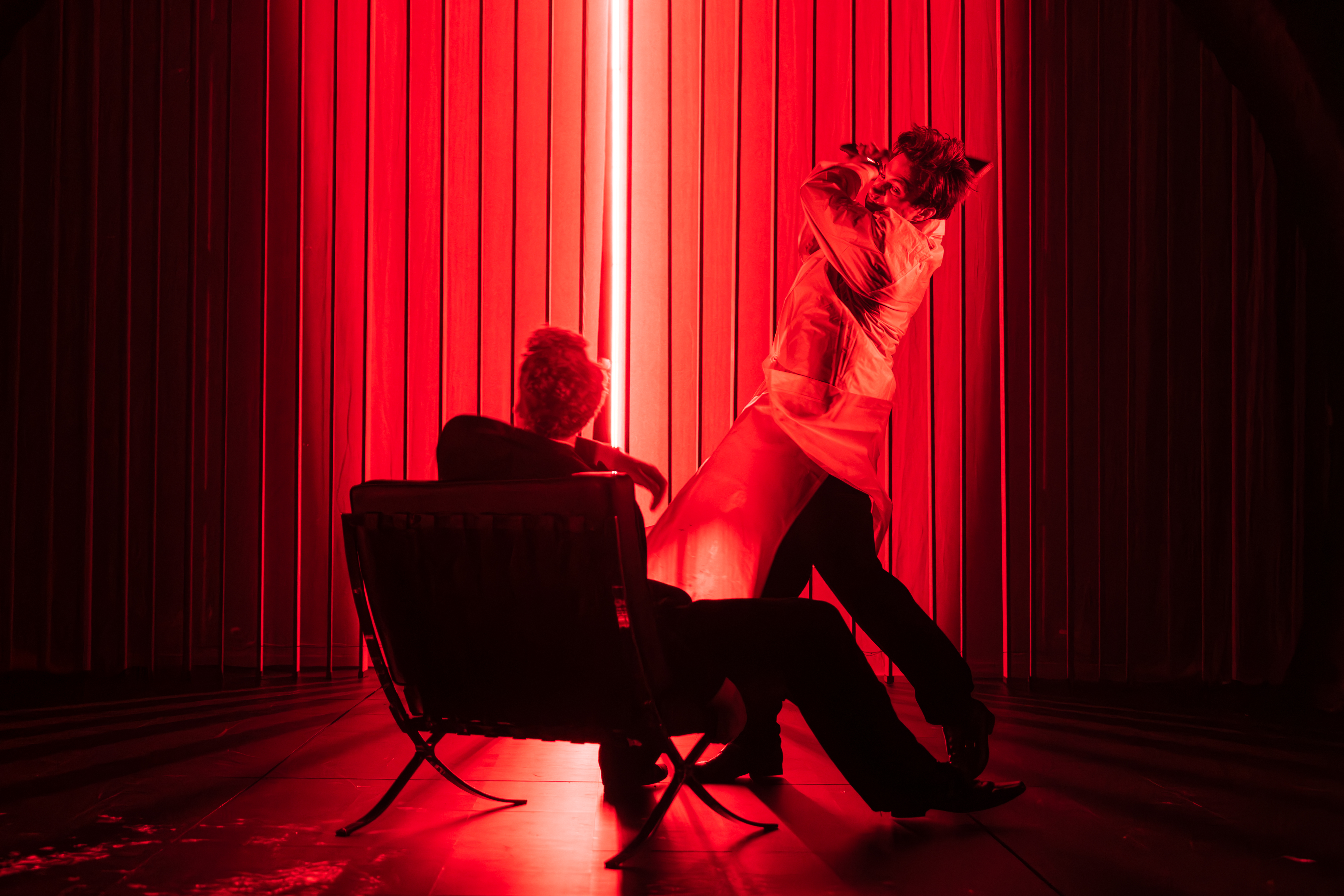
FRAY Studio grounds American Psycho revival with Disguise-powered LED staging
Live Events
Theatre & Opera

In January 2026, the musical adaptation of American Psycho returned to London for the first time since its 2013 debut. Back at its original home, the Almeida Theatre, the revival brought Bret Easton Ellis’ searing satire to a contemporary audience, with its themes of excess and identity feeling as relevant as ever.
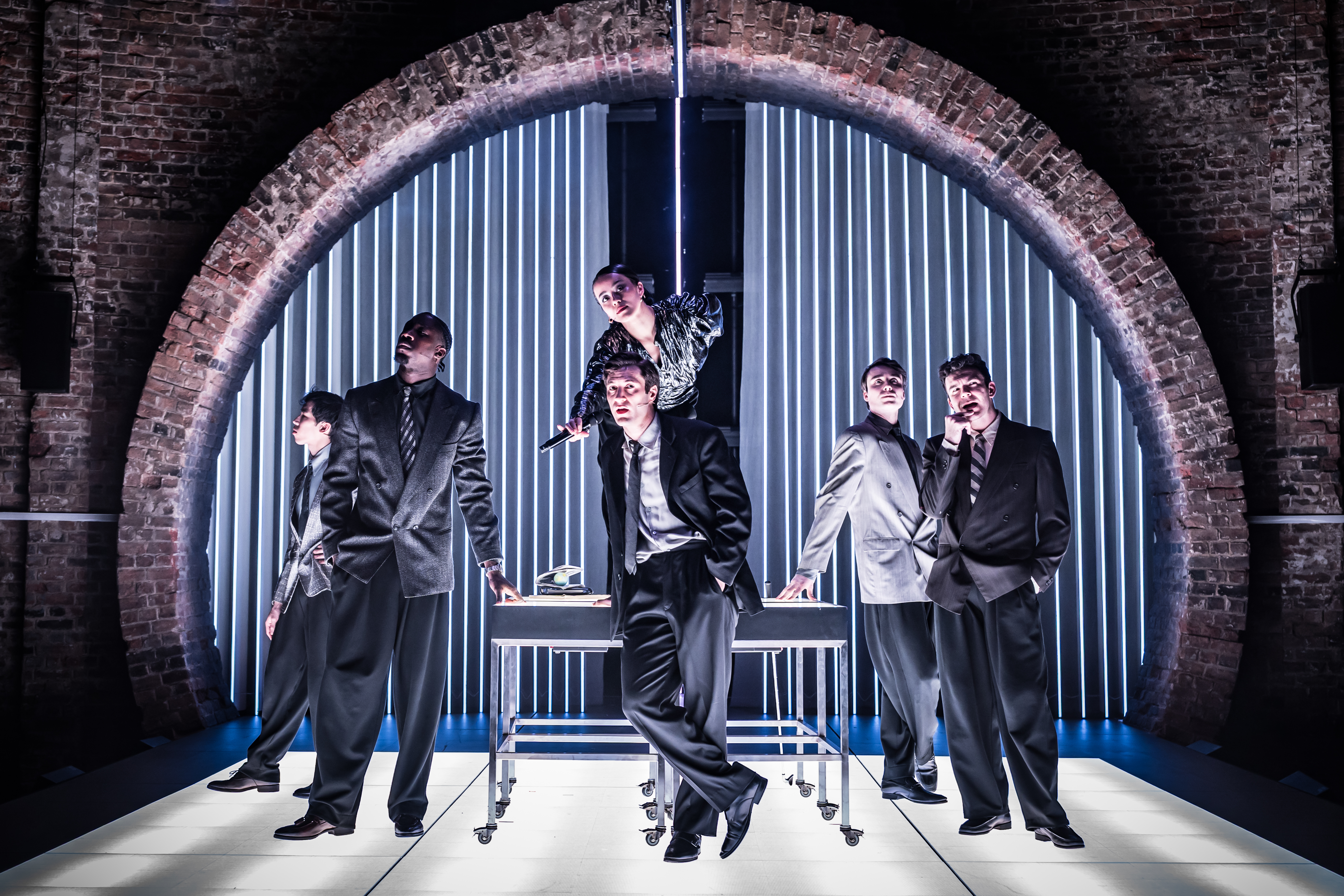
Rather than revisiting the original design, Es Devlin reimagined the production with a bold new visual approach centred on a dynamic LED floor. This became the show’s primary storytelling surface, integrating video, lighting and choreography within the theatre’s intimate space.
To deliver this vision, FRAY Studio partnered with Disguise, enabling continuous, responsive video playback and precise control throughout the performance.
The challenge
It is never easy to revive a popular theatre production, where the expectation among audiences and critics is for a return to the familiar, infused with fresh ideas. The challenge of meeting these expectations was felt even more keenly by Finn Ross, Creative Director at FRAY Studio and designer of the 2026 revival of American Psycho. Ross had worked on the original London production thirteen years earlier, as well as its 2016 Broadway transfer, so his connection to the musical was already well established.
“What was really interesting about this particular iteration,” Ross says, “is how we completely abandoned all previous work and went for a whole new design, which was very exciting.”
The task at the centre of this was working around the constraints presented by the Almeida. It is a small theatre leaving little room to work during load in and operates on a very tight time scale, both for the pre-production and the load-in and tech periods, leaving little room for error.
Ross’s designs for American Psycho used video sparingly, with the primary element being a large ROE Black Marble 4 LED floor provided by Universal Pixels, which remained in use throughout the entire show. For Ross, this represented a chance to innovate: “For me, it was also really lovely not to have an upstage LED wall for a change – something I've grown very used to, and which seems to have become the standard approach to a show nowadays. I was really happy to have that wall rotated 90 degrees and put it underneath the actors.”
This floor presented challenges of its own, though - “When you have an LED floor in a space, you simply can't let it go to black,” says Ross. “It always has to be doing something in correspondence with the lighting, even if it's very simple – a white square is enough. We could never let it die, which meant it always had to have an opinion and a point of view, always speaking to the scene, the energy, the music.”
The solution
FRAY Studio turned to Disguise to help them deliver the non-stop video content that the production called for. Supporting the deployment, Universal Pixels were trusted to technically deliver the system for the production, preparing Disguise servers and designing failover systems to ensure the show ran smoothly throughout its run. Ross cites the simplicity and reliability of Disguise’s software as the initial draw. The Disguise workflow aligns closely with FRAY Studio's, and Ross and his team acknowledge the benefits of a software system that works with them to deliver projects.
Having Disguise on a project is like having an old friend: you know what it's going to do and how to get it to do things without having to worry
Co-Founder of FRAY Studio
For American Psycho, the studio made extensive use of Disguise’s Frame Replace feature, using it iteratively to quickly patch in short, ten-second fixes that bought the cast and crew time to implement musical changes onstage or move actors from one point to another.
FRAY Studio also used multiple show control methodologies to ensure that the production was as slick as Patrick Bateman, American Psycho’s sadistic lead character. Elements could be triggered by lighting changes or pushed by timecode, allowing the production team precision control over every aspect of the show.
At other times, the team tracked the choreography onstage, allowing the LED floor to interact with the actors at pivotal moments through the show, whether that manifested as two characters standing on a single cloud, or being connected by a strip of white light that ran from one side of the stage to the other.
Results
For Ross, the success of the project extended beyond the final visuals on stage.
“I’m proud of this project for a lot of reasons,” he says, “but perhaps the most satisfying thing about this experience was having a room full of people all going in the same direction together. We found that direction with minimal friction and incredible goodwill. Collaboration was quick, iterative, and honest. No one was being precious, and the work flowed beautifully.”
This collaborative approach enabled the team to work efficiently under pressure, iterating quickly and refining ideas in real time throughout the production process.
The results were reflected in the show’s reception. The revival sold out and was well received by critics, with reviews describing the production as “brilliant”, “wildly entertaining” and “seamlessly executed.”