
Intel Extreme Masters raises the bar for live esports production with Disguise
E-sports

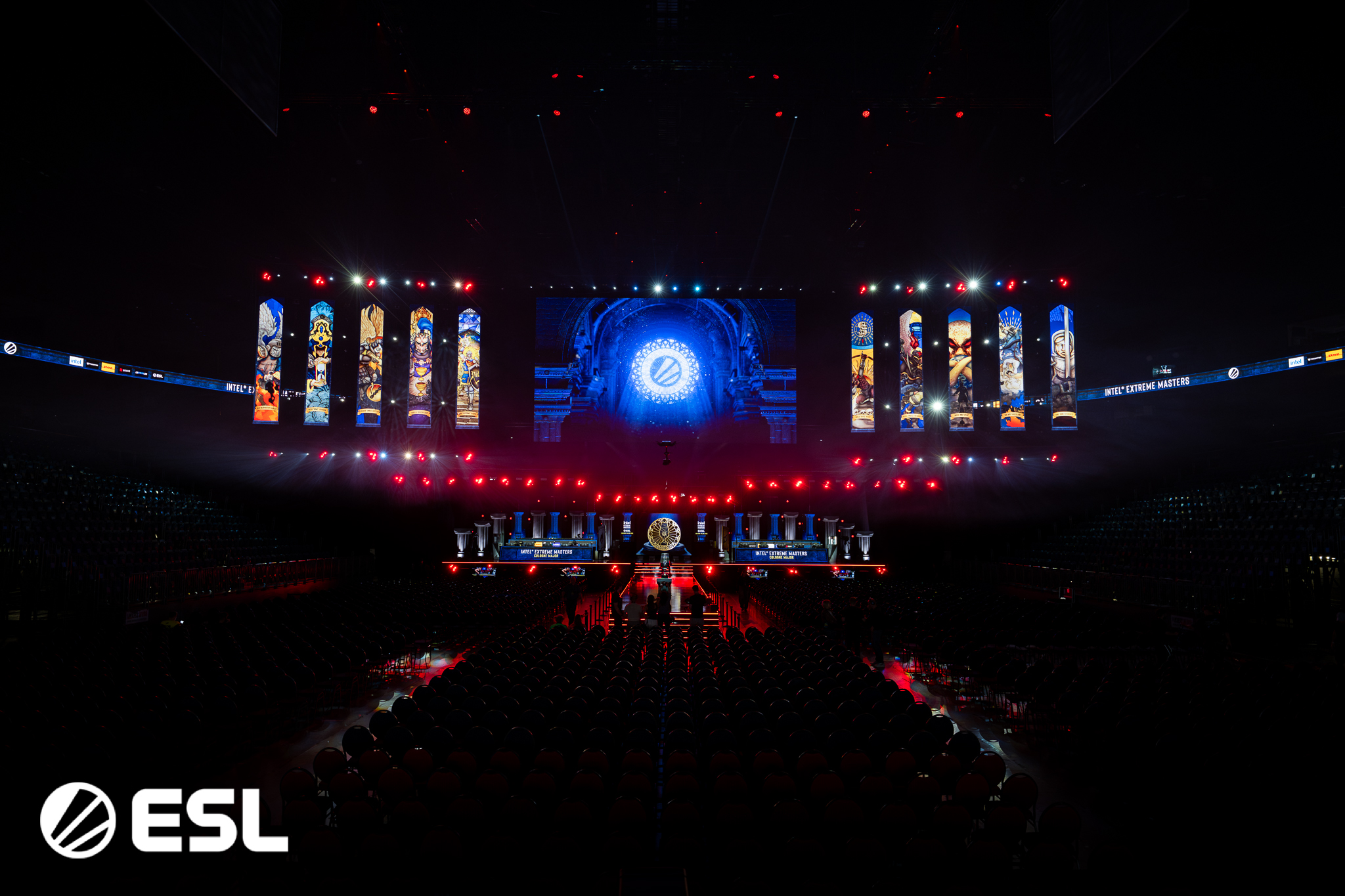
With 18,000 fans filling the LANXESS Arena in Cologne and a record 2.75 million concurrent viewers tuning in online, Intel Extreme Masters (IEM) Cologne 2026 became the most-watched Counter-Strike event in history. As the first tournament to surpass 100 million hours watched, the event demanded a broadcast-quality production that could deliver a seamless experience both inside the arena and across multiple international streams.
To meet those demands, creative visual event studio Pixway, contracted by dlp-Motive, the general contractor for AVL, relied on three disguised VX 4 media servers to power real-time arena graphics, custom game data integration and regionalised sponsor content throughout the tournament.
The Challenge
For Pixway, the goal was to create an in-arena experience that matched the quality and pace of the broadcast while keeping audiences immersed in the action from the first round to the last.
That meant accurately presenting live gameplay information with minimal latency, ensuring visuals remained synchronised with the game at all times, and giving audiences the context they needed to follow the fast-moving action without overwhelming the screen.
"The audience had to be immersed in the game action and understand why something was happening or what was taking place elsewhere on the map," explains Nevil Jeremias, Programmer at Pixway. "We needed to represent all of this information without clutter while shifting the focus back to the players and their emotions between rounds."
Alongside the gameplay graphics, the production also had to accommodate constantly changing content. Team matchups changed throughout the tournament, while the winner of the Most Valuable Player award wasn't confirmed until the closing stages of the Grand Final, requiring player-specific assets to be updated while the show was still live.
For the first time, ESL also wanted to regionalise sponsor branding using GhostFrame, allowing different broadcast markets to see different sponsor logos while maintaining a seamless experience inside the arena.
With IEM touring globally every four to six weeks, the team also needed a workflow that could be quickly adapted to different venues and LED configurations without rebuilding the production from scratch.
The Solution
Pixway built a flexible workflow around Disguise VX 4 media servers, using Disguise as the central platform for playback, content management and real-time graphics.
To deepen the connection between the game and the arena experience, the team developed a custom application that subscribed to live gameplay data directly from ESL's game servers. The application received selected in-game events via OSC before splitting the information into two separate workflows.
One stream was sent directly into Disguise, triggering OSC Sockpuppet layers to drive visual elements throughout the arena in real time. The second powered browser-based graphics displaying scores, timers and announcements, which were then brought back into Designer through feed mapping.
To simplify the show workflow, Pixway made extensive use of Designer's Indirections, allowing team-specific branding and match assets to be swapped instantly while keeping the underlying timelines unchanged.
The approach proved particularly valuable during the Most Valuable Player presentation. Rather than rebuilding sequences once the winner was announced, operators could simply redirect the existing content to the correct player assets.
"Without Designer’s indirections we would need to set up all the sequencing each day depending on the match with team-related content," explains Jeremias. "That would take quite a bit of time, but instead all we needed was one button push."
Pixway also worked closely with ESL to introduce GhostFrame for regional sponsorship. Following extensive testing of LED settings, cameras and content playback, GhostFrame was mapped precisely to the sponsor wall LED tiles, minimising its impact on the in-arena experience while delivering localised branding to different broadcast regions. During visually led moments such as the opening ceremony and map flyovers, GhostFrame could be temporarily disabled before being re-enabled for sponsor content.
Throughout the production, Disguise provided the flexibility to update content on the fly while maintaining the high frame rates and reliable playback required for both the arena displays and the broadcast workflow.
The Result
IEM Cologne 2026 welcomed more than 18,000 spectators to the LANXESS Arena and reached a peak audience of 2,751,121 concurrent viewers, becoming the first Counter-Strike event to surpass 100 million hours watched.
Beyond the record-breaking audience, Pixway established a workflow that can now be carried across future Intel Extreme Masters events, allowing the team to adapt quickly to new venues while maintaining a consistent show experience.
Following the success of Cologne, Pixway plans to use the same Disguise-powered workflow at upcoming Intel Extreme Masters tournaments in China, Poland, the United States and Brazil.
Our main focus was broadcast quality and visual consistency across every show. Wherever we work, we know what the Disguise system can handle. It's proven, reliable and gives us the flexibility we need to adapt quickly.
Programmer at Pixway