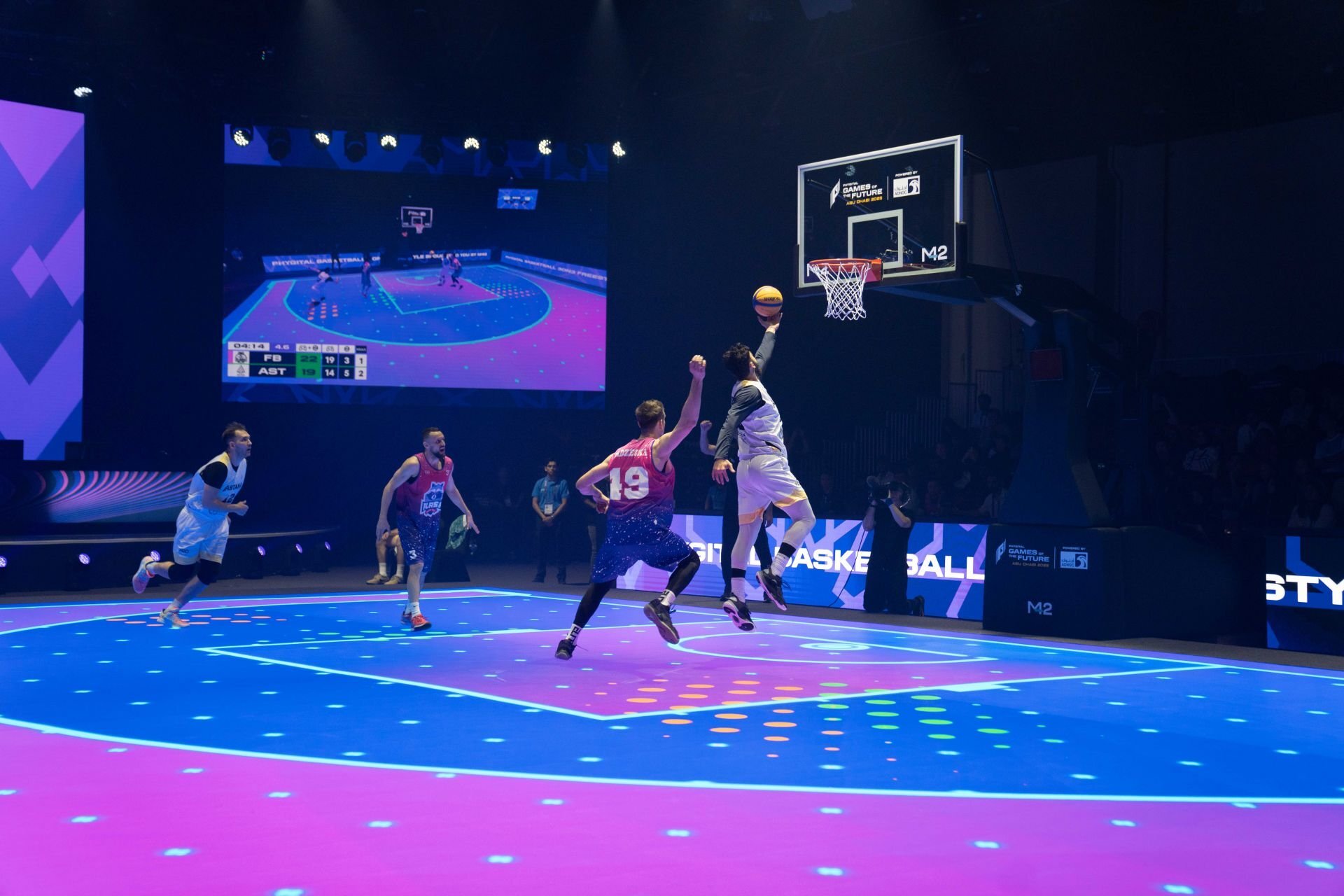
Phygital Games of the Future blends real and virtual sports with Disguise
Immersive Experiences
Live Events
E-sports
Disguise Platform

Phygital’s Games of the Future is not your average esports tournament. Instead of competing solely online, each team is also pitted against each other in a physical sports match, with the final winners determined by adding up their combined digital-physical scores. It’s a groundbreaking idea - and one that the tournament has now successfully executed for two years running, played out in front of a live audience as well as at-home viewers.
Blending both physical and digital sports, however, isn’t easy. Visual design and technology studio, bright! studios, was brought on board to bring the ambitious event to life, creating an epic visual showdown across six days at the Abu Dhabi National Exhibition Center. Using 25 Disguise media servers and Disguise’s Designer software, the bright! team managed all the LED content needed to run the next-generation tournament in just six weeks.
The challenge
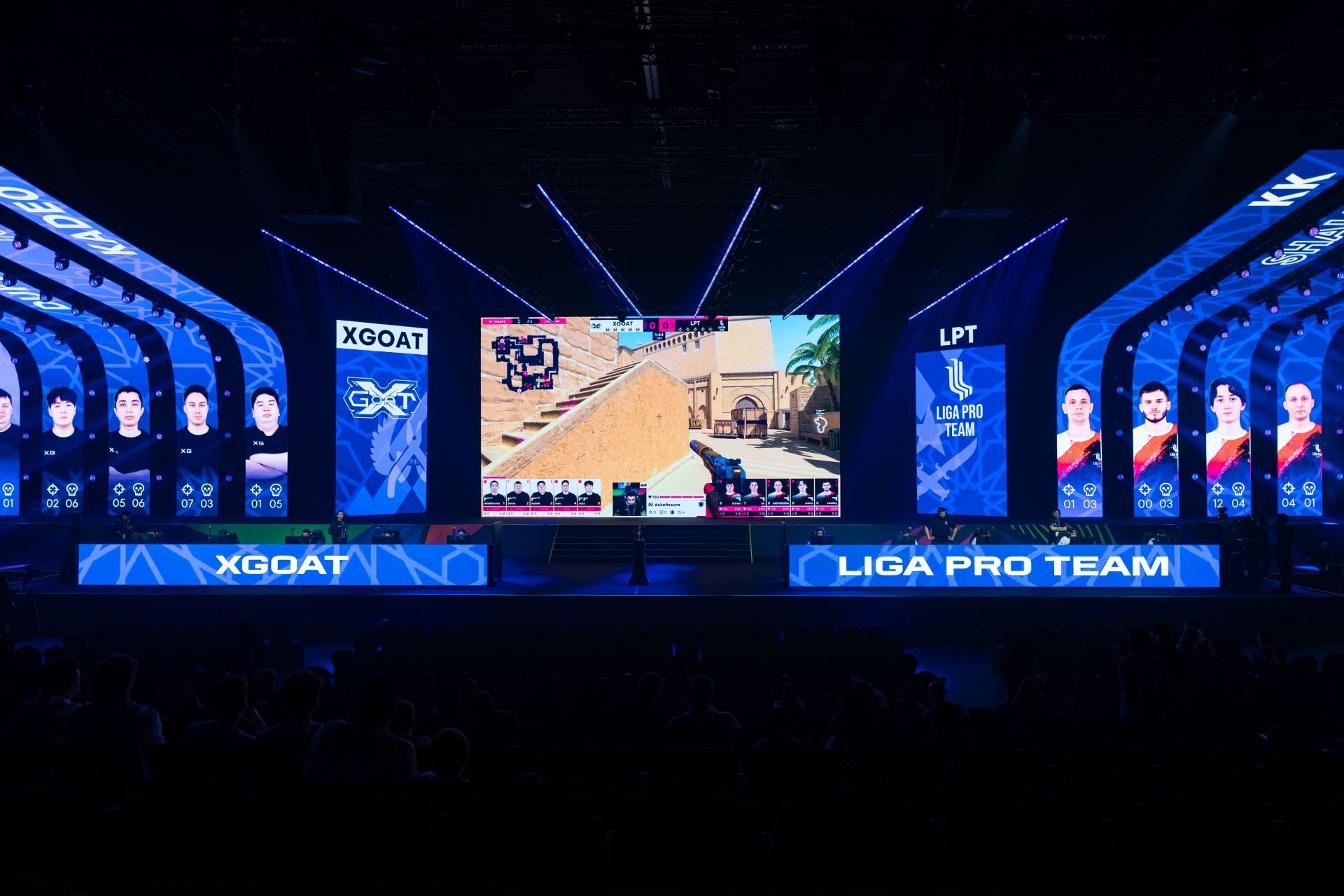
The biggest challenge in delivering Phygital’s Games of the Future was managing the complexity of the tournament. Athletes competed across 11 disciplines - and for most categories, the athletes would start playing in an esports challenge before moving on to a real football field, basketball court, or even a live-action laser tag arena.
For the bright! studios team, this meant accounting for many different AV setups depending on the sport involved. Each discipline also needed LED visuals that could work for both esports and more traditional live sports audiences, and on top of that, audience members from home needed to be able to watch the tournament and interact with it in real time through Twitch.
“You have renders and technical plans, but on site, everything is a bit different,” explains Leon Herche, Creative Lead on the project. “By the time our work on Games of the Future was complete, we’d delivered the LED visuals behind nine stages, which were all different depending on the sport involved. We also created 250 media files for the tournament with Unreal Engine and Notch. These included video content that told the story of the tournament’s lore featuring the athletes’ virtual avatars, as well as background graphics and real-time graphics for cues like wins, breaks, and timeouts.”
Herche explains that the team also had to factor in a variety of interactive media on the project. “We had AR, LED screens, and different data sets from sensors as we wanted audience members to see, including statistics like calories burned,” he continues. “We needed to bring all that data together to make the tournament visually compelling for both esports and traditional sports fans.”
The solution
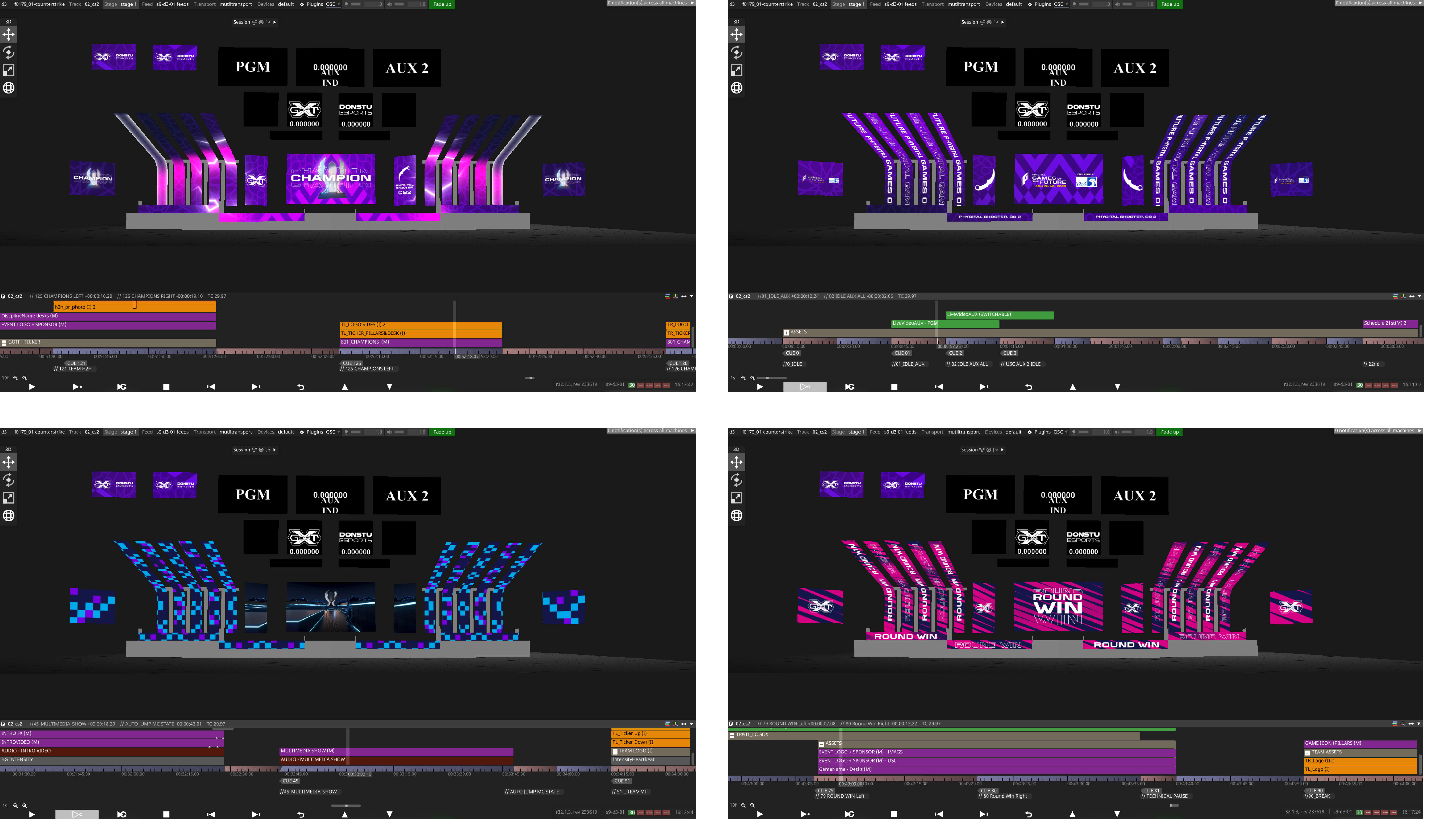
In order to deliver such a complex project in just six weeks, the bright! studios team relied on Disguise’s Designer software, paired with 25 Disguise media servers, including the GX 3, GX 2C and EX 3+. “Our team adopted the Disguise workflow in 2010,” explains Michael Giegerich, MD at bright! studios. “We’ve been using Disguise ever since, as it makes it doable to deliver large-scale projects in a short turnaround time. It just makes more sense.”
For both Herche and Giegerich, Designer’s Feed Mapping feature was especially useful. With it, they could specify any number of source rectangles within their content and then map those rectangles directly to multiple surfaces, allowing them to compensate for differences in pixel density between the different sports stages. Using Notch for all interactive graphics and combining with the Indirections feature in Designer meant that the team could easily highlight team and player stats, make changes on the go, and ensure a visually appealing outcome, with Indirection providing flexibility to switch out pre-programmed content on the fly, as well as connect to Game or Sports API to change visuals based on the data.
“The whole event was very data-driven because of the data from the sensors, so we aimed to have every LED wall, column and floor be real-time capable,” reveals Giegerich. “With Designer, we could layer content to create different moments quickly, as well as use different blend modes, animate on the timeline, and use masks for logos so we didn’t have to animate every logo manually.”
Using Designer is like using a version of After Effects that was built especially for live shows - it gave us the flexibility we needed.

Managing Director, bright! studios
The results
Phygital’s Games of the Future tournament was a major success, with participants from over 60 countries. The tournament also reached millions of fans worldwide through its live broadcast, which was covered in more than 13 languages.
“We couldn’t have done our part in the tournament without our great team on site,” Herche concludes. “Luckily, there are lots of very skilled people from the Disguise community that we could rely on to deliver a project like this, and we are so happy with the results. Phygital has already announced its next tournament coming up in 2026, and we can’t wait to see how this blend of real and virtual sports continues to change the industry for the future.”