
Disguise powers dynamic content on Dave’s UK arena tour, delivered by Universal Pixels
Live Events
Music
Disguise Platform

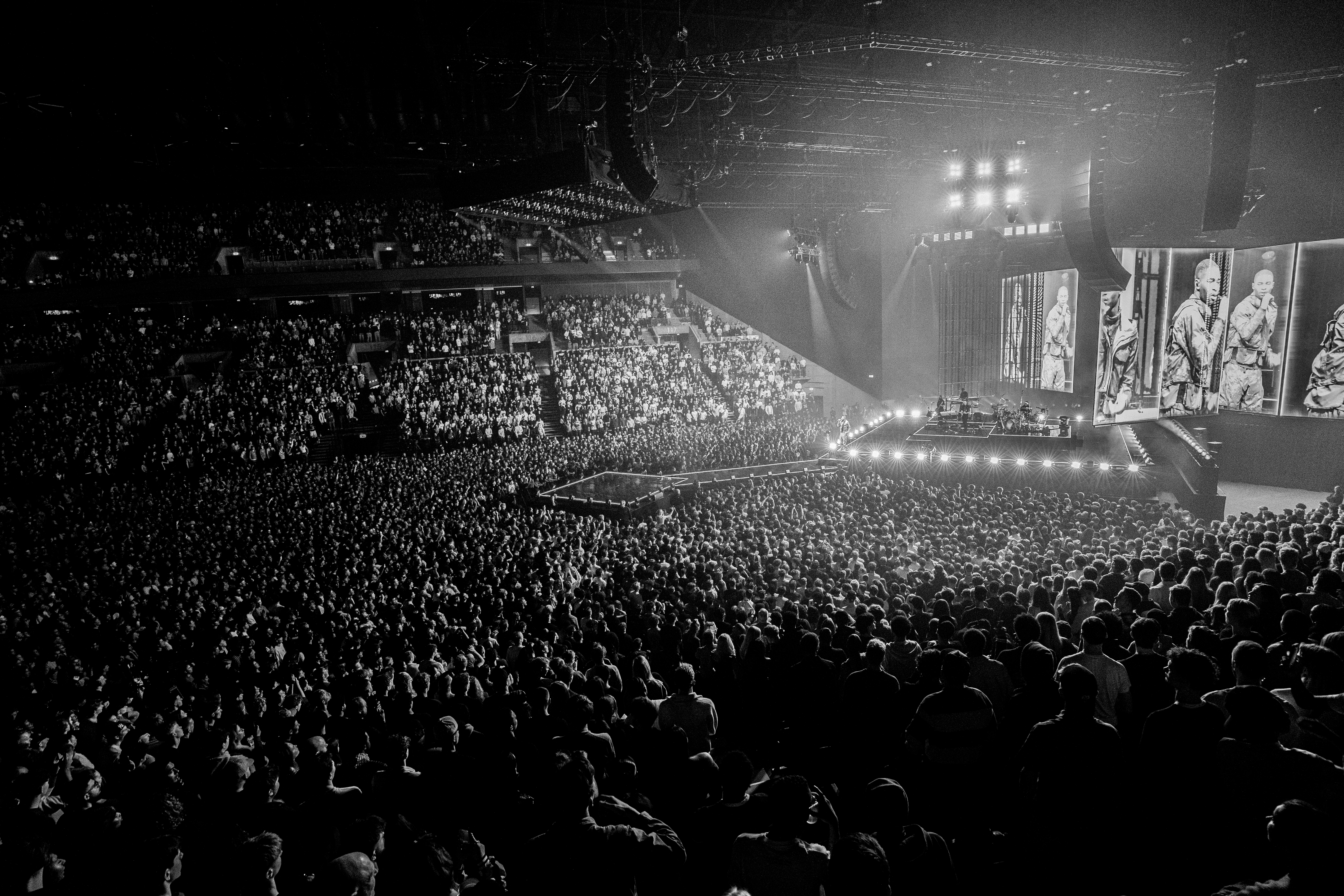
Dave’s first UK tour in four years - in support of his latest album, The Boy Who Played the Harp - demanded a production design that could expand and contract with the twists and turns of the show. Video specialists Universal Pixels delivered a dynamic video system designed to keep pace with the performance and bring the show narrative to life, powered by Disguise GX 3.
At the centre of the video design were eight moving tracking screens suspended above the stage, which shifted position and orientation throughout the performance. The system was built around a real-time workflow linking automation, tracking and content rendering, where positional data from the moving screens fed directly into Disguise GX 3 media servers. This allowed the servers to continuously update a digital model of the stage, with content mapped and re-rendered on a frame-by-frame basis. Rather than triggering pre-defined cues, the system constantly recalculated how content should be displayed in relation to the position and angle of each screen, ensuring it maintained spatial integrity as the physical setup moved. The show visuals were controlled through Disguise’s Designer software by programmer and operator, Richard Turner.
“We effectively had a digital twin of the real world, and the system rendered the correct content for each frame,” explained Universal Pixels’ Technical Specialist James Morden. Running at 50 frames per second, the system provided the update rate needed for content to track accurately with the movement of the screens in real time, while keeping latency low enough that the relationship between movement and image remained coherent. “You’re not just playing back content; you’re responding to movement in real time and making sure what the audience sees always makes sense in the space,” added Morden.

The Disguise GX 3 servers handled playback, tracking data, live camera feeds and generative content via Notch. This allowed the system to respond dynamically to lighting, audio and performance cues. This level of integration enabled a series of effects built on alignment between physical movement and rendered content. This included layering, transparency and controlled lighting states, allowing the content on the screens to appear solid at times and almost disappear at others.
The show's sense of depth was achieved through a combination of screen design, content and lighting. The ROE Visual Vanish V8T panels, with their 60% transparency and high brightness, allowed light and imagery to pass through and interact across multiple layers of the system. As the screens moved and lighting states changed, this created shifting levels of opacity and visibility. In addition, two further ROE Visual Vanish V8T screens were used as static IMAG screens, again fed via Disguise media servers, and all powered by Brompton Technology’s Tessera SX40 LED video processors. Alongside this, six Panasonic AK-UC4000 4K studio cameras, including two on Junior 5 remote controlled motorised dollies, were deployed with six Blackmagic Micro Studio 4K G2 cameras for cutaway shots. The feeds were mixed by Matt Askem on one of Universal Pixels’ Kula PPUs, bringing the live performance into the server system and supplying real-time imagery to the media servers and screens.
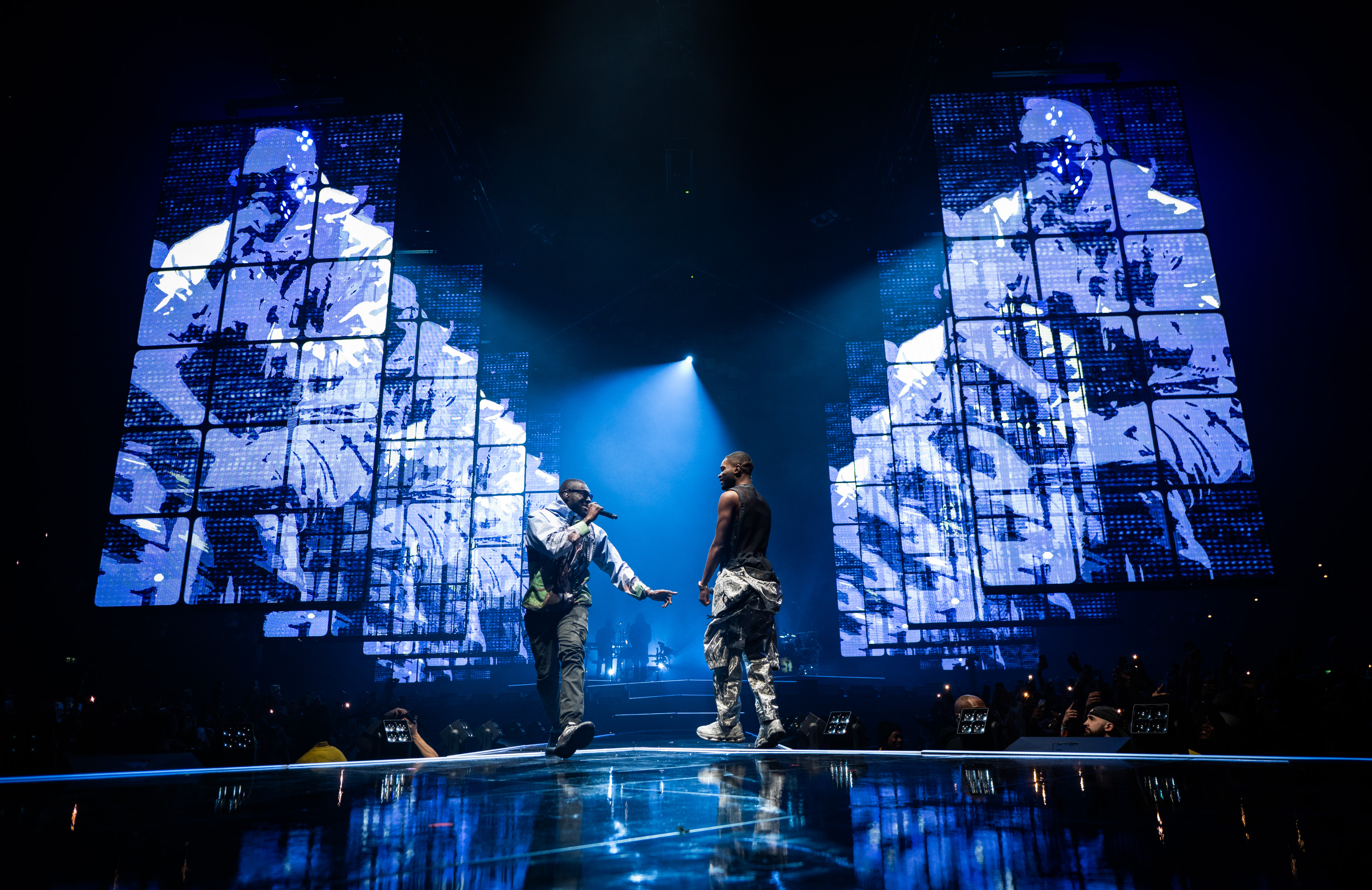
Shooting in v-log allowed the cameras to retain a wide dynamic range, which was critical in an environment where lighting levels and colour temperature were constantly changing. This gave the team greater control when matching camera feeds to rendered content and LED output, ensuring a consistent image across both real and generated elements. “There’s a lot of colour science going on in the background to keep everything looking consistent,” explained Morden.
The tour demonstrates effective delivery of complex real-time video systems in a major touring environment. Real-time rendering, tracking integration and live colour processing worked as a single system, supporting creative elements without focusing on the technology itself.
Credits
