
Broadcaster RTHK raises the bar for live sports coverage with Disguise
Extended Reality
Broadcast

Every four years, China’s largest sporting event, the National Games, is one of the most important events in the region. The 2025 National Games were the most impressive yet, seeing 15,000 athletes compete over 500 events – making the event roughly one-third bigger in size than the Paris 2024 Olympics.
For the first time, the Games were hosted across three locations – Guangdong, Macau, and Hong Kong. As one of the largest sporting events to ever come to Hong Kong, the public broadcaster RTHK (Radio Television Hong Kong) wanted to bring a new layer of sophistication to its sports broadcasting coverage.
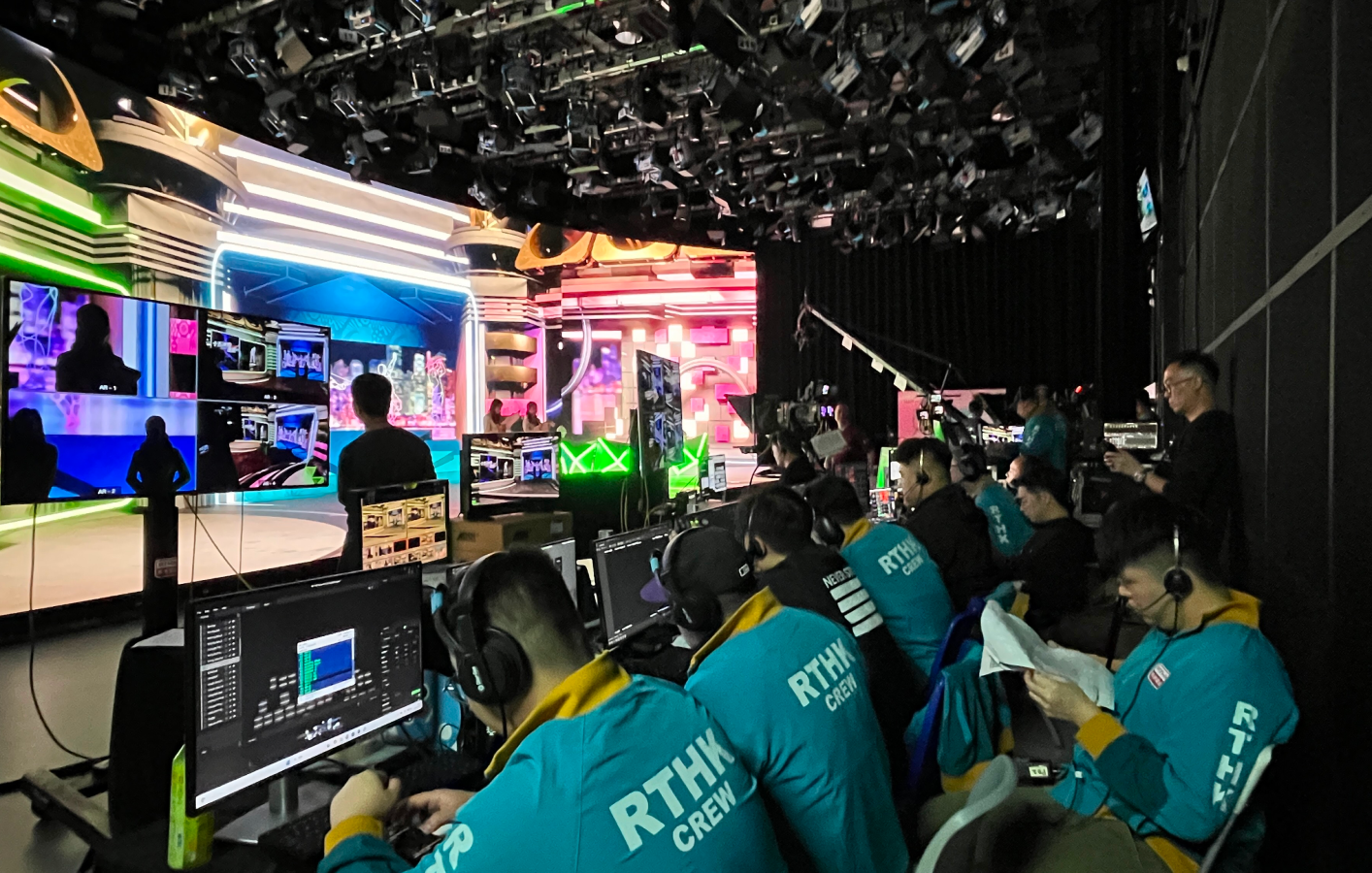
With support from Disguise and a system incorporating VX 4+ servers and RXIII render nodes, the RTHK team eschewed the traditional sports broadcasting set-up of static desks and lower thirds and instead set a new precedent for sports broadcasting in Hong Kong.
The challenge
Wayne Law, Manager of Solutions Design APAC at Disguise, explains RTHK’s main objective was “to enhance the editorial storytelling for the Games: giving audiences clearer context, real-time insights, and a strong visual identity without letting the graphics overwhelm the sport itself.”
This included a central studio that could be placed in an immersive, visual environment where 3D scenes, statistics and analytics could live in the same space as the presenters. This would require extensive programming power and a system that could playback high-quality content rapidly, without lag.
RTHK also had a unique technical challenge to create a ‘teleporter’ workflow in which studio hosts could interview off-location contributors as holographs – as if they had been teleported directly into the studio.
To achieve these technical feats, the broadcaster needed a reliable workflow that could playback high-quality graphics and fully synchronise in real-time – handling everything from camera tracking and AR content to data feeds.
Critically, the technology also needed to integrate with RTHK’s existing infrastructure. This meant that the operators and editorial staff could confidently manage feeds under intense live conditions.
The solution
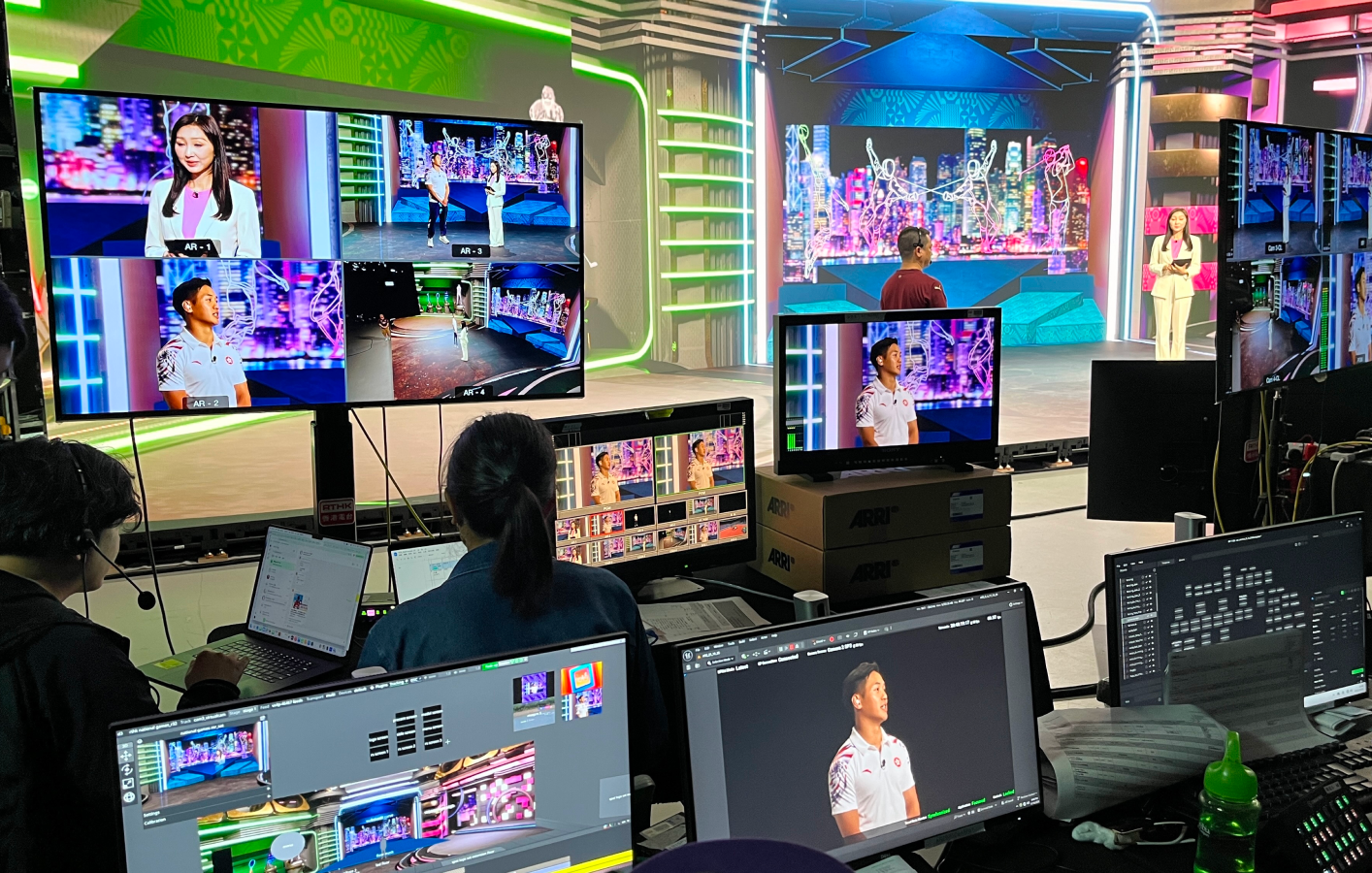
RTHK used Disguise technology in the centre of its workflows. This meant the teams could use an intuitive, user-friendly system where they could trigger AR moments, highlights, and live inserts in one place – as well as make adjustments on the hoof.
Wayne explains: “Disguise provided a single platform to manage real-time rendering, video playback and key/fill outputs, rather than relying on multiple disconnected systems”.
Using Disguise as the central system reduced the chance of errors and lag, with the six VX 4+ media servers used to render AR graphics and video content (including two back-up servers), and RXIII render servers providing the real-time 3D engines for XR scenes and stadium environments.
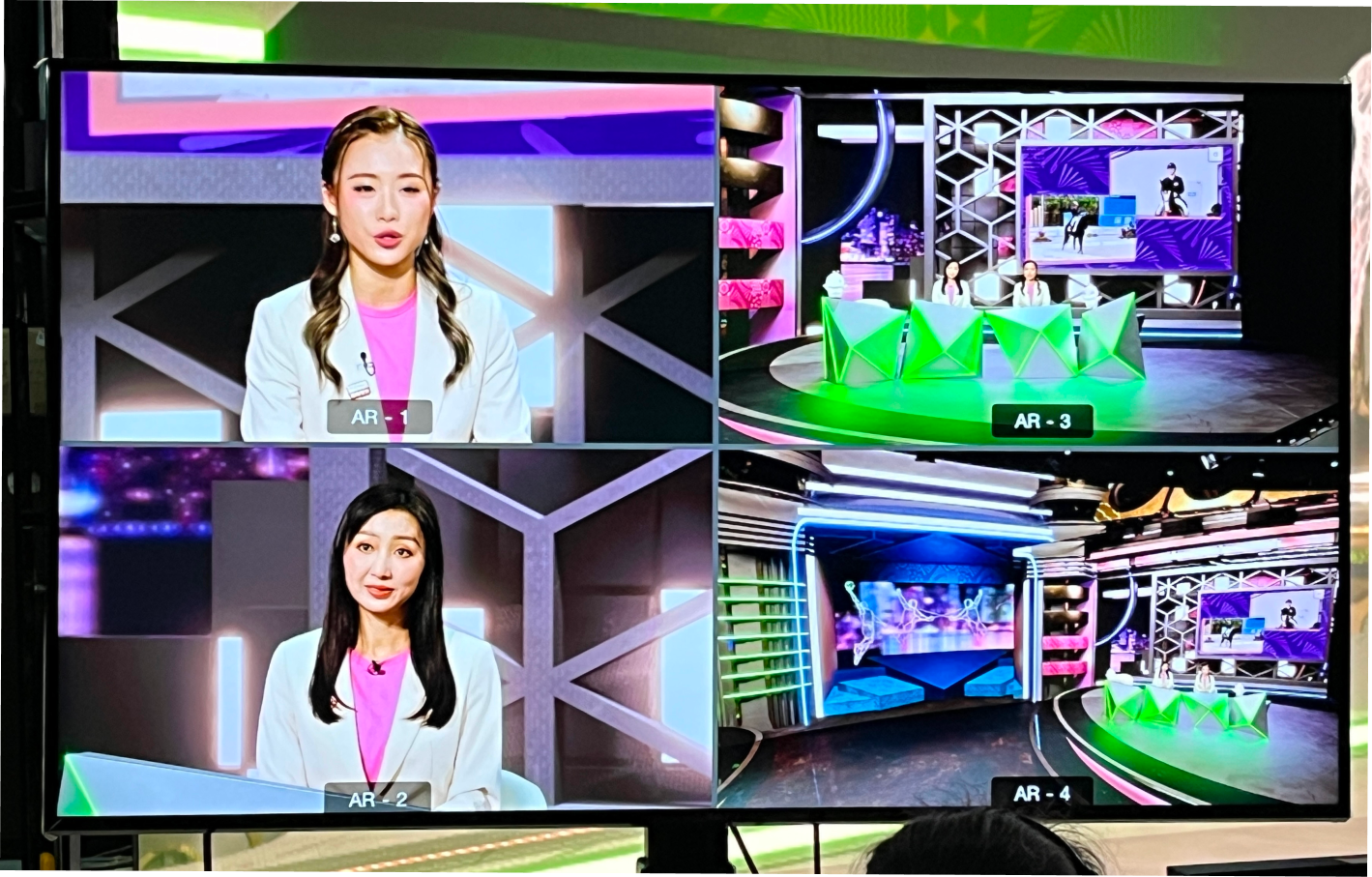
This enabled genuinely innovative new technical feats, moving away from flat data graphics and into immersive 3D storytelling. Live footage could be easily blended with XR and AR effects – this included the effect of medal tables and game statistics rising out of the studio floor and wrapping around the presenters.
Meanwhile, the teleporter segments seamlessly removed the barrier between the studio location and the presenter on the field, making all interviews feel both more immediate and personal.
Wayne explains: “Live interviews were actually much simpler because remote guests were treated like another ‘virtual camera position’ in the same environment, rather than acting as a separate feed.”
Results
RTHK’s coverage of the 2025 National Games showed that the broadcaster could lead the region in adopting cutting-edge, real-time graphic workflows.
The seamless fusion of real‑time AR, data visualisation and storytelling held up over the marathon live broadcast and coverage became an immersive experience, rather than a safer, traditional desk-based sports show.
Wayne concludes: “This project genuinely changed how viewers experienced the Games, turning a traditional studio show into an immersive, AR‑driven environment that audiences could immediately understand and enjoy. The fresher visual style helped attract younger and more digitally savvy viewers without alienating the existing audience.”